



4 hours·English
4.2(15,439)
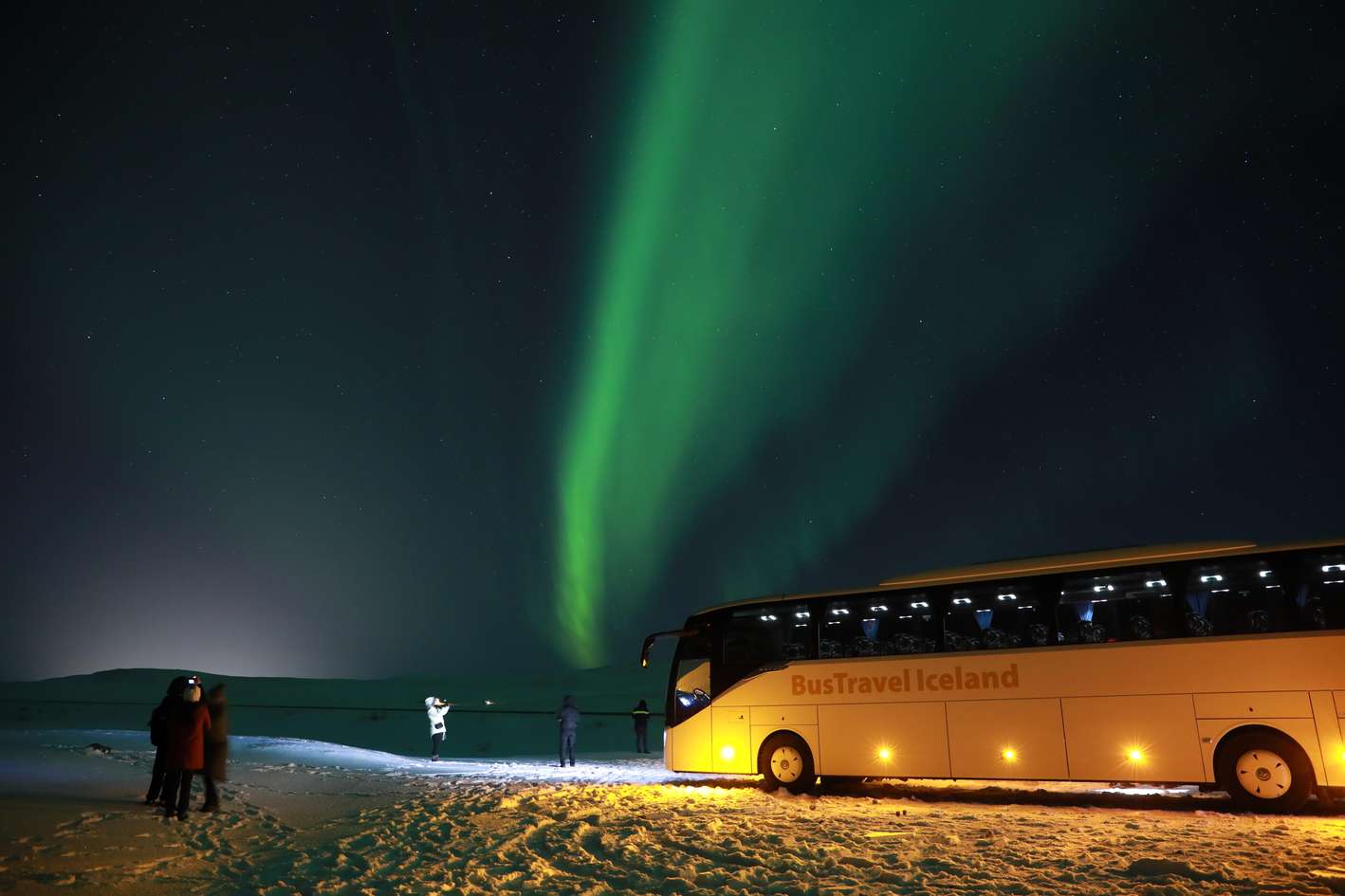
From Reykjavik: Northern Lights Bus Tour with Hot Cocoa
Free cancellationHotel pickup includedEvening trip to see the Aurora Borealis
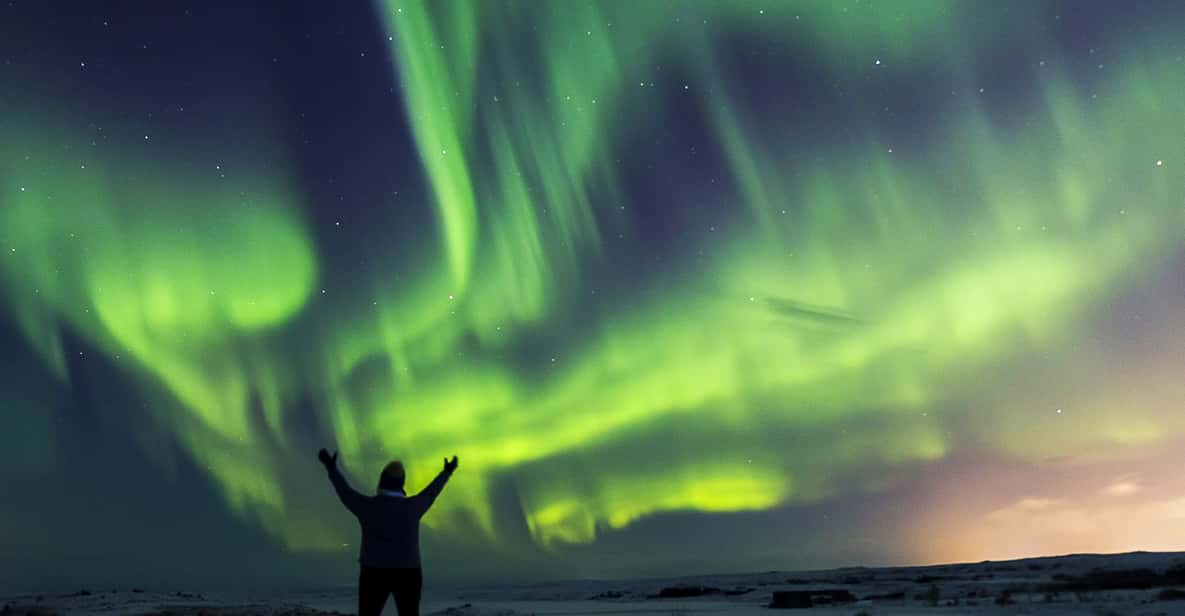
Plan your dates for the darkest, clearest nights of the season. Local guides track cloud maps every evening, drive to the clear gaps in the sky, and rebook you free on another night if the lights stay hidden. Pick your month, book your first night, and let the remaining nights of your trip work in your favor.
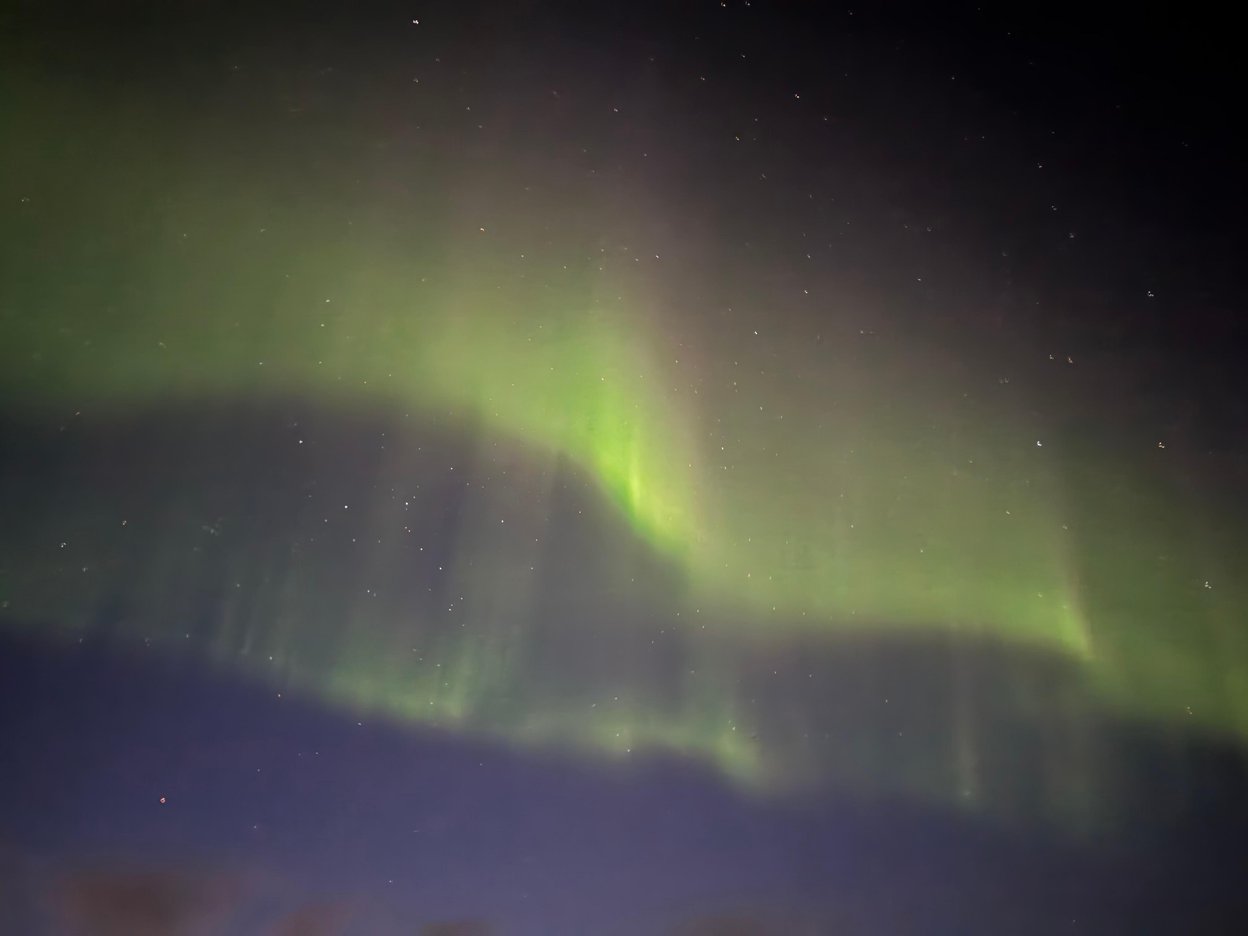
"Seeing the Aurora Borealis was surreal and easily the highlight of my European trip. Sharing it with my son, both longtime Northern Lights fans, made it a memory we'll keep forever."
book night one, free retry covers the rest

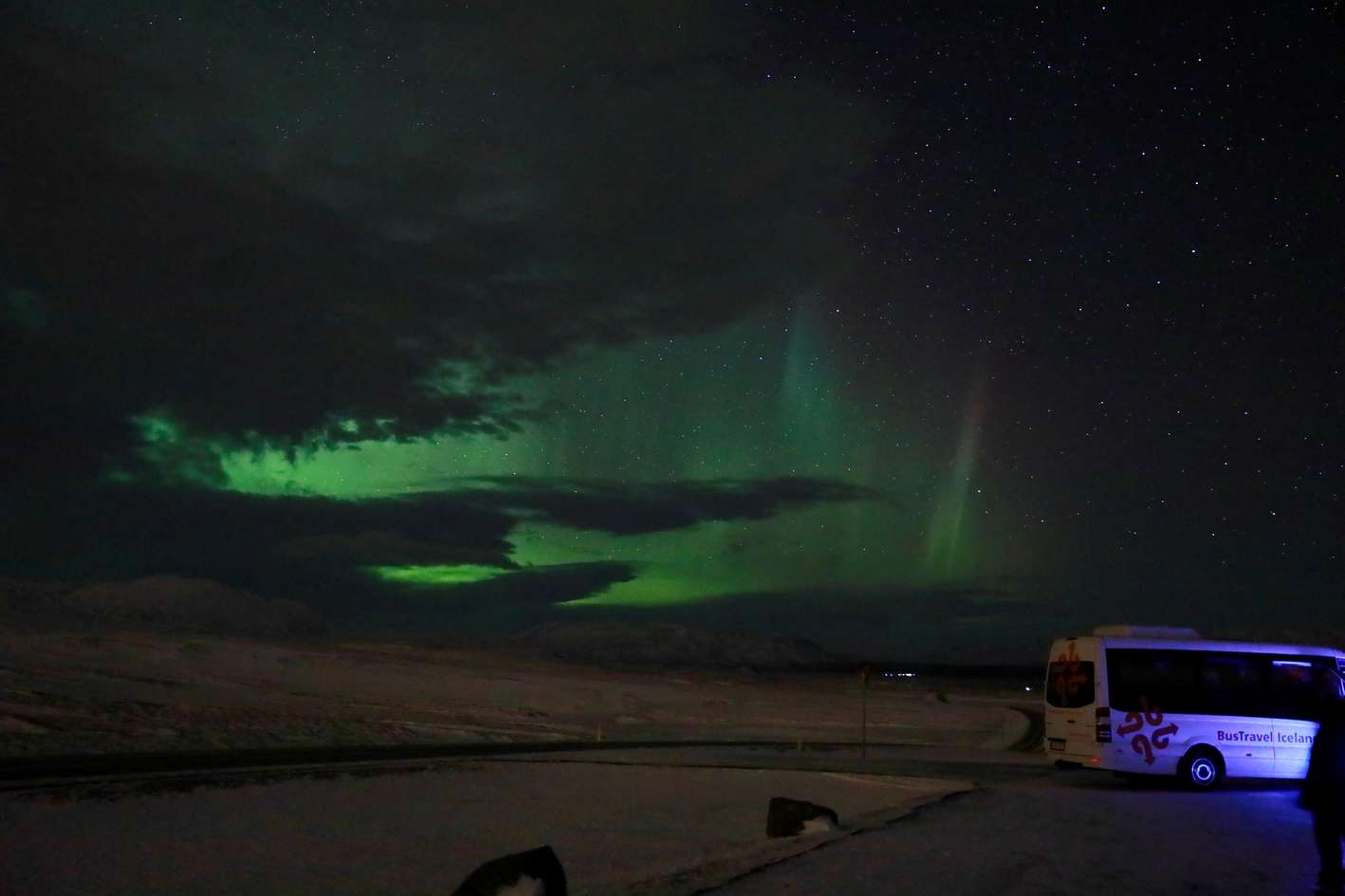
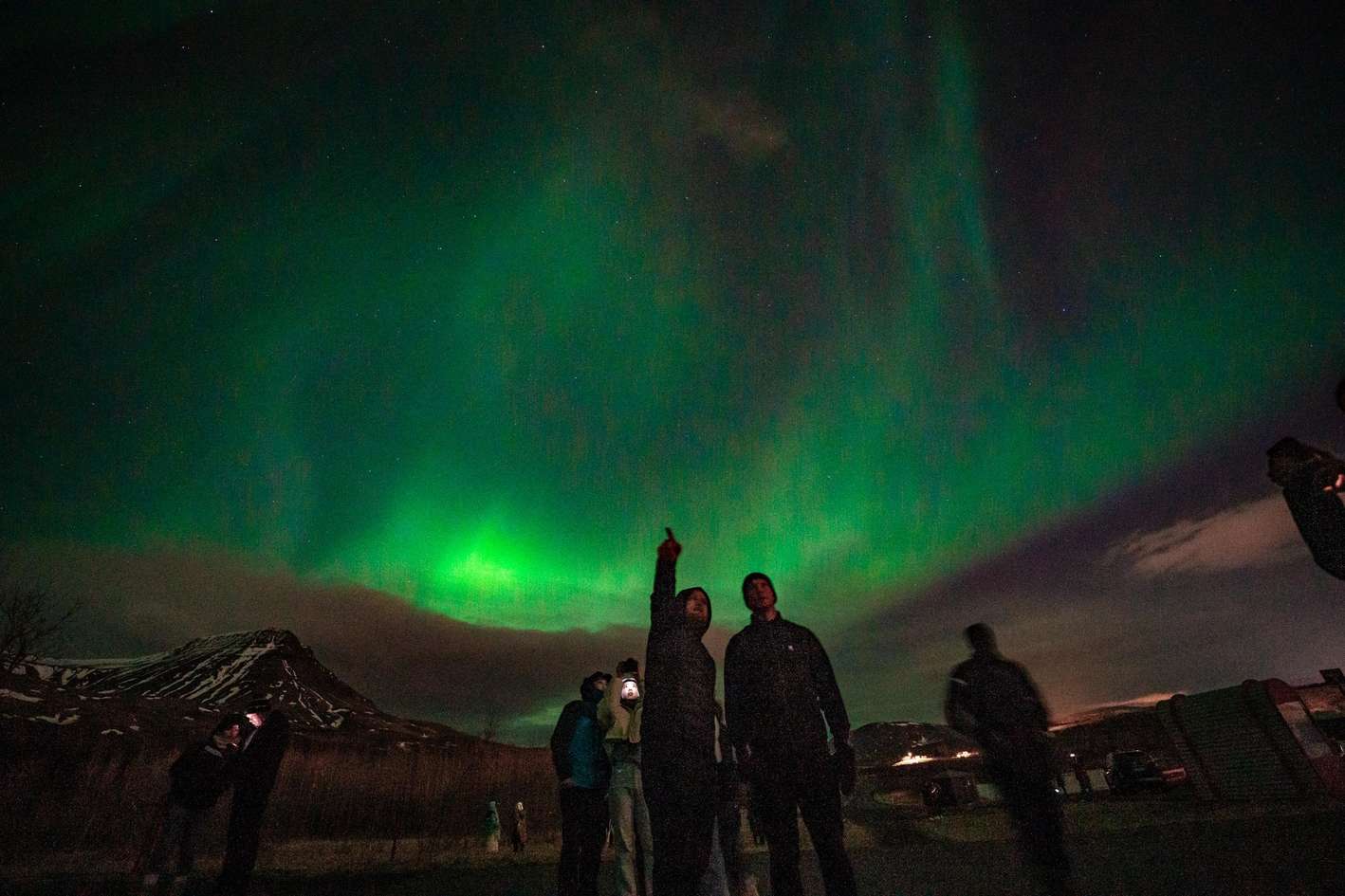





sept and march: storms come easier
The lights run from late August to mid-April, and no single night in between is promised. Booking flights around that calendar is the whole decision, and the odds on any given evening are the part few travelers expect.
The season runs from August 25 to about April 15; May through July has zero true darkness.
The aurora shows on clear nights about 3 to 4 times a week, and tours see it on 40 to 55% of dark-season nights.
A four-night stay gives a modeled 49 to 69% chance of at least one sighting, and a seven-night stay lifts that to 72 to 87%.
December has the least cloud in Reykjavik at 73%, plus 14.6 hours of nightly darkness, but only 4.4 daylight hours.
Book your tour for your first night in town so the rest of your stay is free for retries.
Plan your visit between late August and mid-April, when the sky gets dark enough for aurora tours to run, and book your tour for the first night of your stay so you have spare evenings to retry.
The season has hard edges, and they surprise people. May, June and July bring zero hours of true darkness to Reykjavik, so no display can appear no matter how active the sun is.
Commercial aurora tours close for the summer by mid-April and only resume on August 25, when the night manages about 1.7 hours of full dark.
Between those dates the tours run daily. September through March each offer between 7.3 and 14.6 hours of darkness a night, and the clear nights within chase reach of the city number 13 to 20 a month in midwinter.
January: 5 out of 5 for how busy it gets. Peak tour crowds arrive during one of the coldest months, taking advantage of nearly 14 hours of nightly darkness.
Tap a month to read it.
December: 14.6 hours of darkness. Peak crowds face the darkest month of the year, with under 5 hours of daylight and frequent clear chase nights.
Tap a month to read it.
June: 20.8 hours of daylight. Northern lights tours do not run in June because the midnight sun prevents dark skies.
Tap a month to read it.
December: 20 clear dark nights within 75 km. Peak crowds face the darkest month of the year, with under 5 hours of daylight and frequent clear chase nights.
Tap a month to read it.
March: 11 clear dark nights. Tours stay busy as daylight expands, though roughly 9 hours of darkness still deliver about 17 clear chase nights across the region.
Tap a month to read it.
The ends of the season are the part to plan around. April gives you just 3.8 hours of full darkness, and cruise departures from the Old Harbour stop for good on April 15.
Late August works too, but with fewer clear dark nights than any winter month. Plan between September and April and the calendar is on your side.
What the calendar cannot give you is a guarantee for any single night, and that question decides everything else about the trip.
The lights are not a nightly performance. On clear nights the aurora appears over Iceland roughly every other night, about 3 to 4 nights a week in the active season.
Tours that hunt every evening report seeing them on 40 to 55% of dark-season nights, which is another way of saying that on any given tour the odds sit close to a coin flip.
The nights you stay change those odds far more than the month you pick. Modeled over a full stay, four nights in Reykjavik gives a 49 to 69% chance of seeing the aurora at least once, while a seven-night stay lifts the same model to 72 to 87%.
Both numbers come from month-by-month modeling of dark-season conditions; the longer range is higher simply because every extra evening is another draw from the same odds.
That is why regulars book the tour for the very first night in town. A cancellation or a night without lights leaves the rest of the itinerary free for a retry, and most operators let you rebook for free.
The bus tour with hot cocoa runs every evening of the season, costs the least of the evening hunts, and carries a free retry if nothing shows. That makes it the easy first attempt of a stay.

December is the deepest night of the year: 14.6 hours of darkness, against 4.4 daylight hours with sunrise near 11 am and sunset at 3:35 pm. January runs similar.
That darkness is the best possible aurora window, but sightseeing happens almost entirely in the dark, and small-group tours sell out weeks ahead in November, December and January.
The shoulder months split the day evenly. March gives 11.8 hours of daylight beside 8.7 of darkness, October 9.7 against 10.8, September a full 13 hours of daylight. You can see Gullfoss and the geysers lit properly, then hunt the sky the same evening.
| Balanced daylight and darkness, milder cold | about 8 to 11 dark hours and 15 to 17 clear nights within reach | |
|---|---|---|
| Midwinter (Nov to Jan) | Maximum darkness, busiest tours, shortest days | 13 to 15 dark hours, small-group trips sell out weeks ahead |
| Late season (Apr) | Small crowds and warmer air | only 3.8 dark hours a night and departures end by about April 15 |
One combo tour makes that double day simple: the Golden Circle and Northern Lights tour runs nine hours, pairs Þingvellir, Geysir and Gullfoss with a specially trained aurora guide after dark, and its shoulder-season departures start at 10 pm once true night arrives.
If the cold matters to you, September and March avoid the deepest midwinter chills, when lows sit between minus 3 and minus 2.

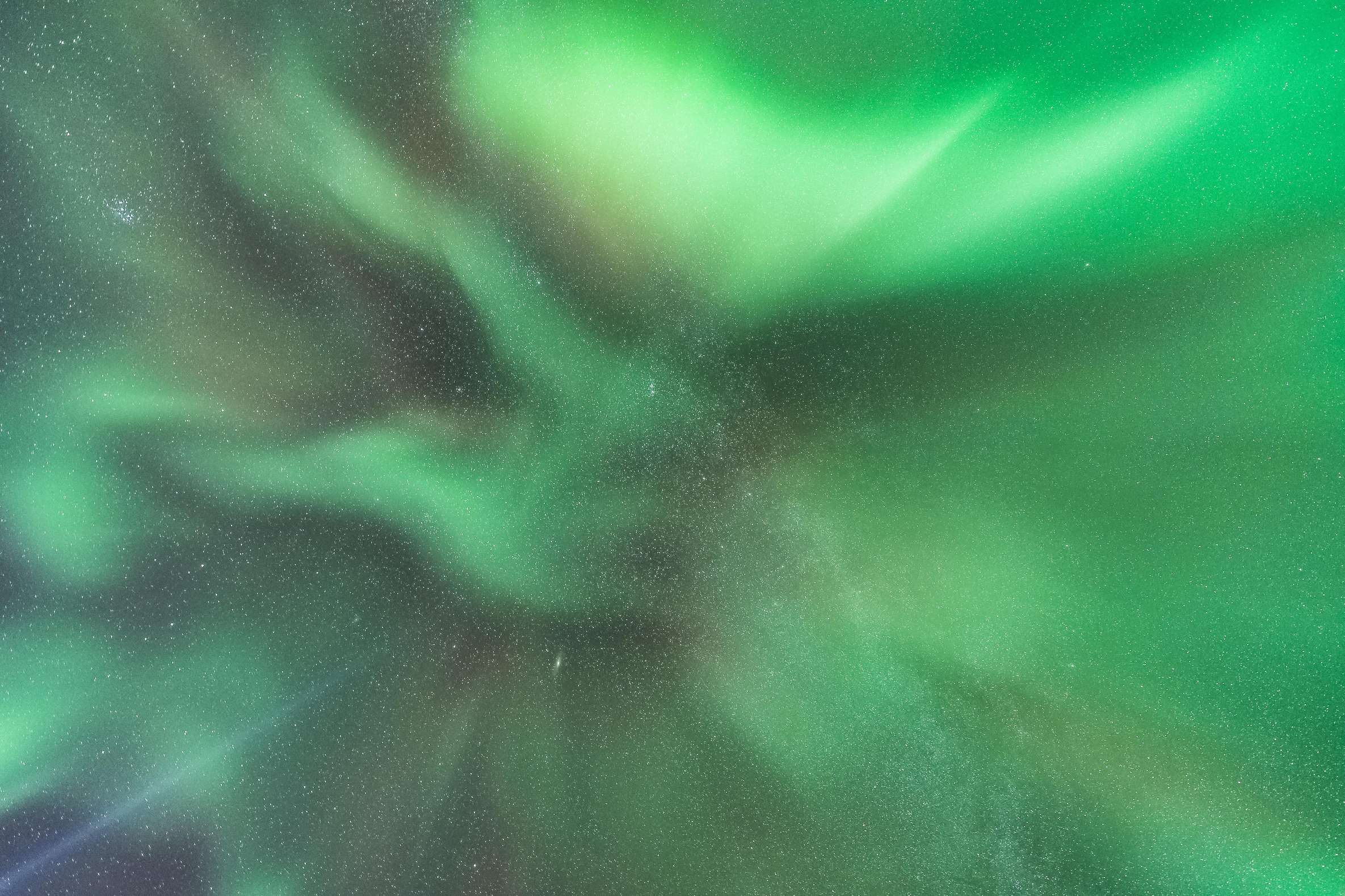
There is a real astronomical reason flexible travelers lean toward the equinoxes. Around September and March, Earth's tilted magnetic field lines up with the sun's in a way that lets the two connect more easily, a geometry known as the Russell-McPherron effect.
Solar wind energy flows into the magnetosphere more freely, and geomagnetic storms become statistically more frequent.
In plain terms, the same sun produces more disturbances in the equinox months than in midwinter. Combined with the balanced daylight of those months and the fact that both sit inside the tour season, September and March carry more useful nights than their darkness hours alone suggest.
None of this guarantees a display on your chosen date. Solar activity runs on its own clock, and a quiet week can follow a stormy one.
It tilts the averages, and averages are what a planner has to work with. If your dates can slide by a couple of weeks, slide them toward an equinox and take the extra statistical edge.
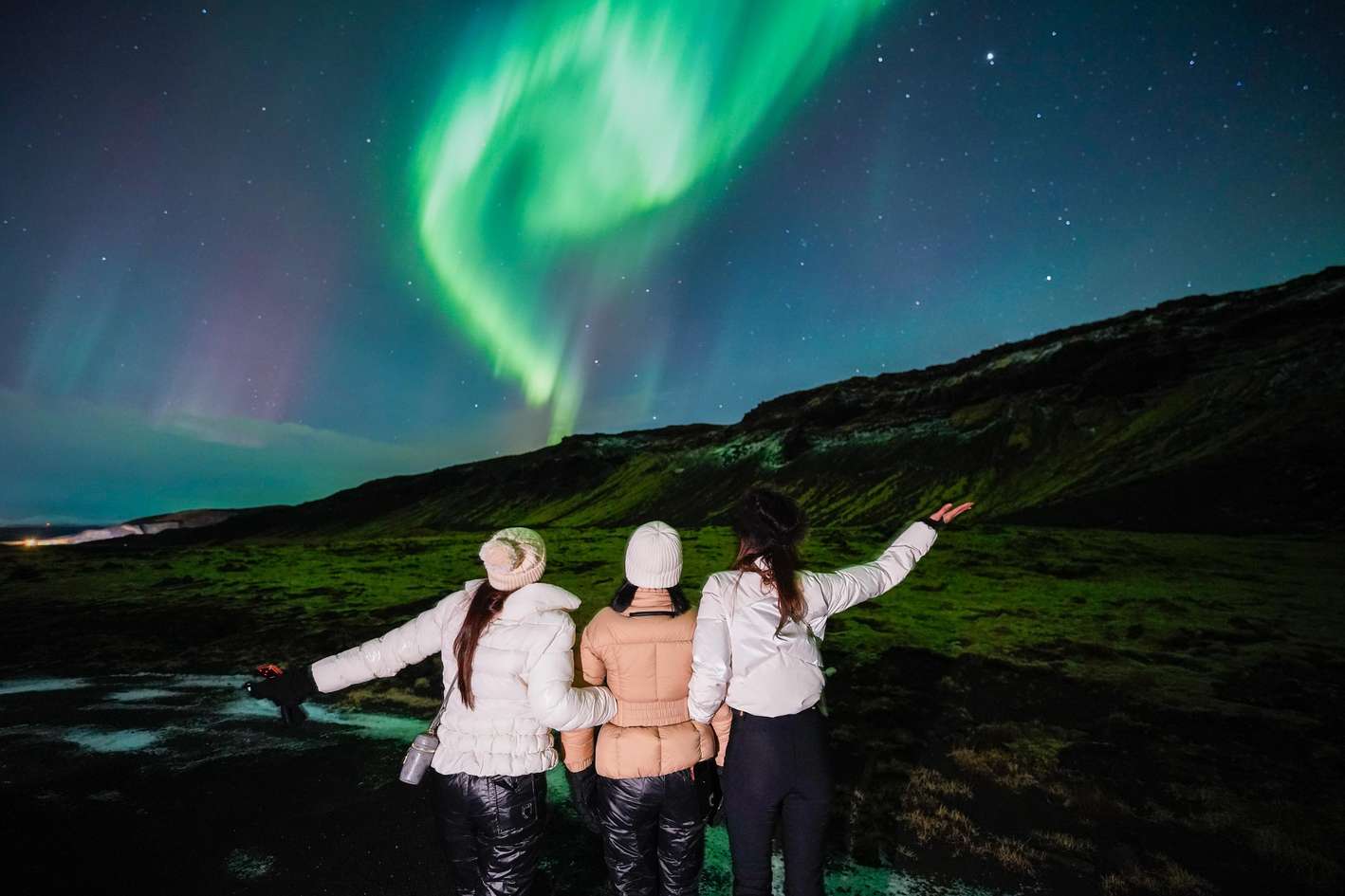
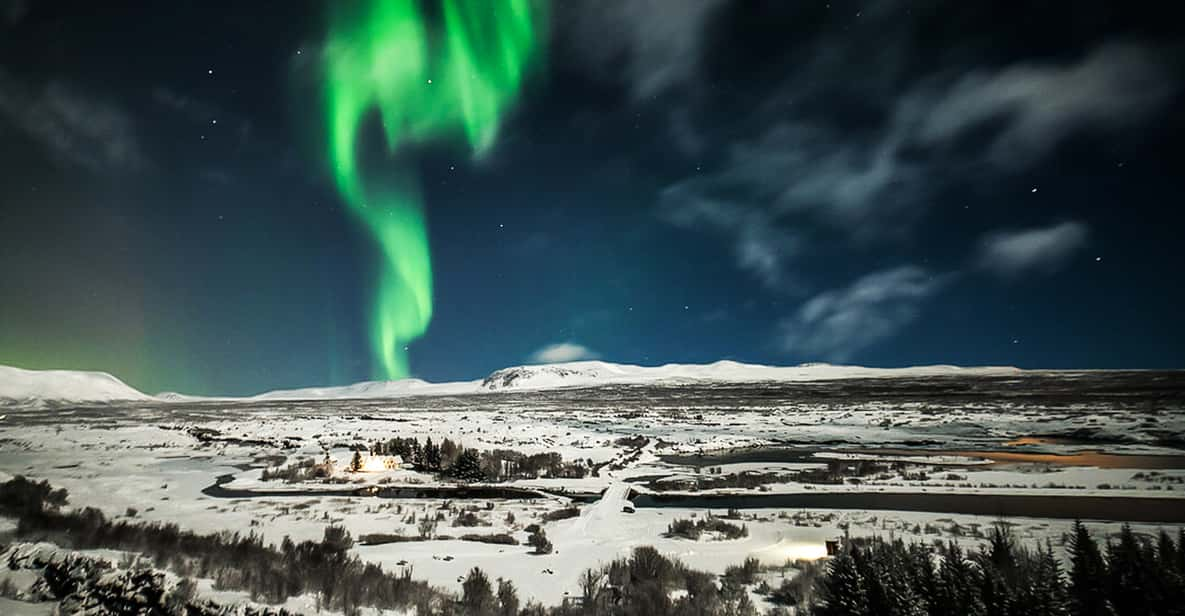
The forecast number most people check is the Kp index, and it is the wrong one to lead with. A low reading can still produce visible lights under clear sky, while a storm-level rating means nothing if low cloud, rain or snow seals the sky.
Cloud cover decides the night. Rain, heavy snow or a complete overcast makes viewing impossible; partial cloud breaks can still let an active aurora through.
The month figures matter for planning. December is the clearest month in Reykjavik at 73% average cloud, with March and April close behind at 75%, and February the cloudiest of the season at 83%. November brings the fewest wet days, about 15 of the month.
For the night itself, use the Icelandic Met Office map at en.vedur.is. It shows cloud in eighths, from 0/8 clear to 8/8 fully covered, with separate forecasts for low and middle cloud.
Cloud decides that; a storm-level rating delivers nothing under 8/8 cover
On clear nights they appear about 3 to 4 nights a week, so roughly half of evenings are quiet
Iceland sits under the auroral oval, so displays appear even in years of low solar activity
Operators watch the same maps. If cloud seals every sensible driving route, they cancel for the night and move you to another evening.
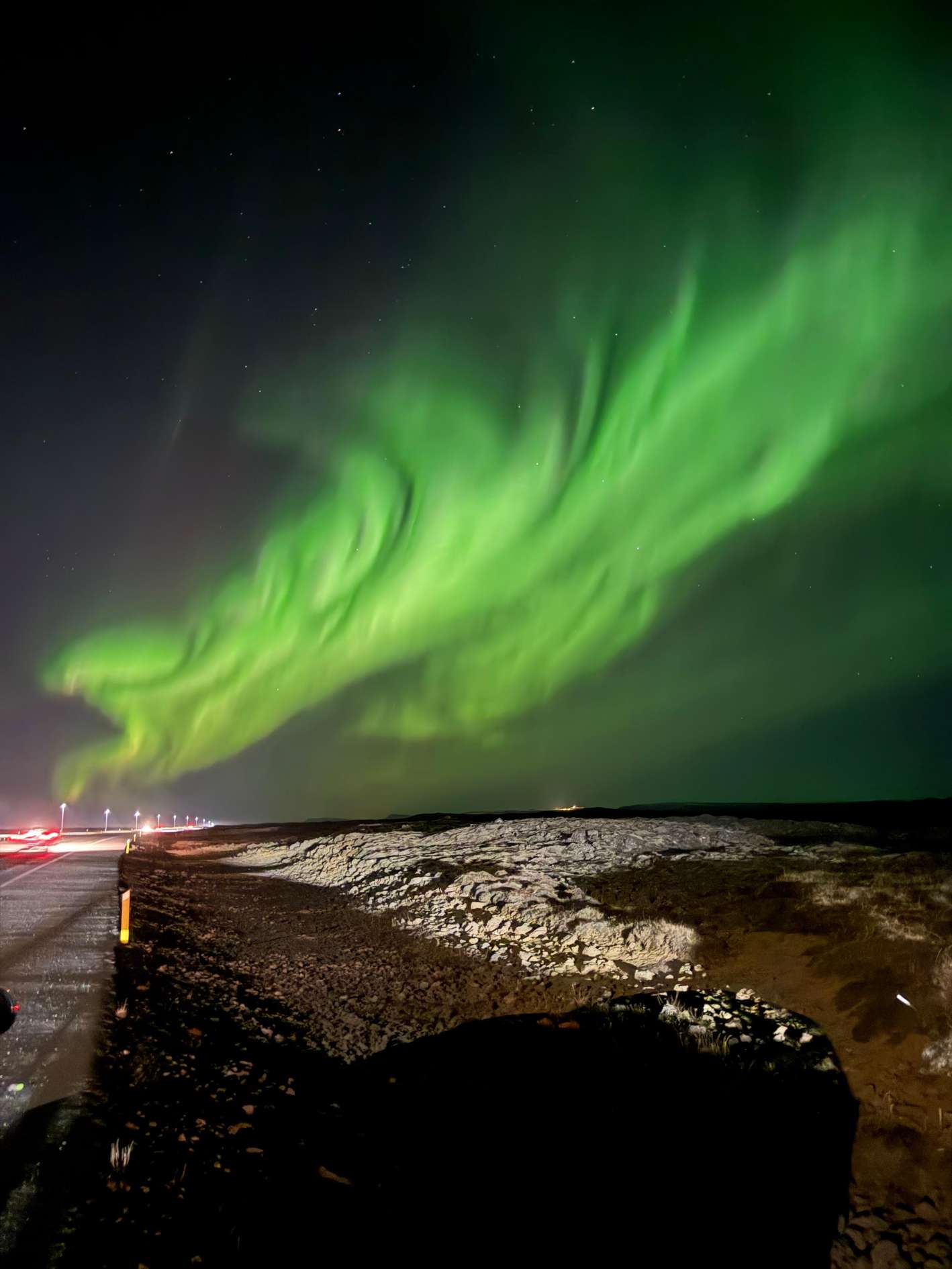
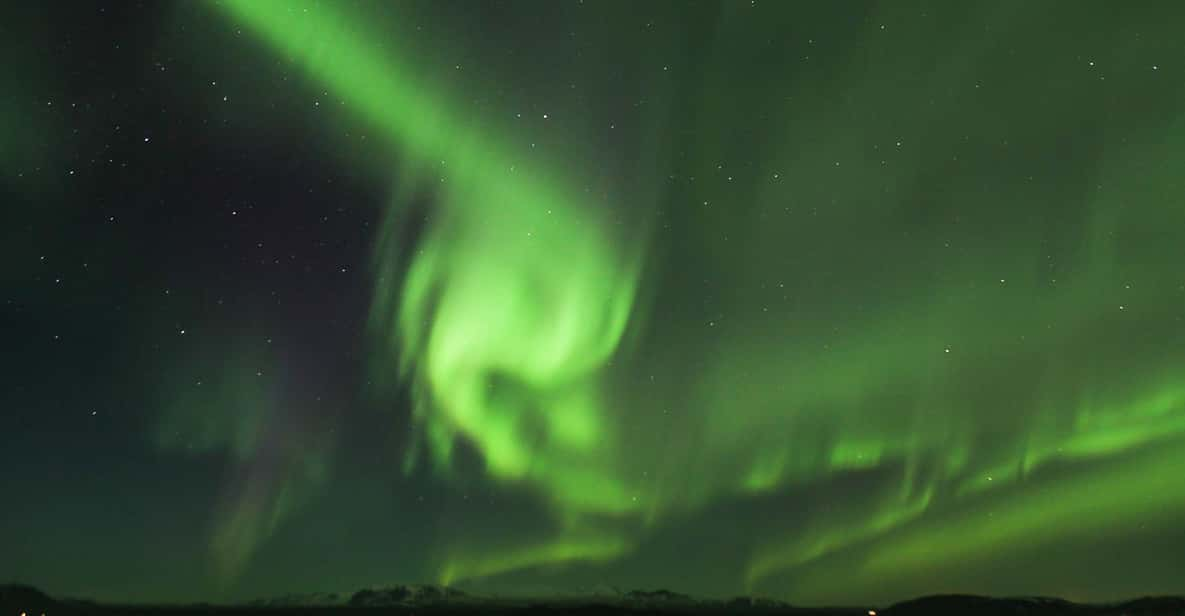
The decision comes earlier than you might expect.
Operators weigh cloud and road forecasts through the late afternoon, some deciding around 4 pm, and if conditions are uncertain they may wait until 5 or 6 pm Most send the cancellation email by 6:30 pm on the day of the tour, and one operator holds a hard cutoff at 6:15 pm for cloud calls.
Between November and February, storms also push some departures closer to the city or cancel them outright.
When the operator cancels before you have joined, you get the choice of a full refund or a free reschedule to another evening. No one loses money to weather here.
| If this happens | What happens then |
|---|---|
| The operator cancels before departure | A full refund or a free reschedule to another evening, your choice |
| The tour runs but no lights appear | No cash refund, but a free retry tour on another night |
| The night half of a combo is cancelled | The aurora portion alone is rescheduled, swapped or refunded while the daytime part proceeds |
If the tour runs and the sky stays empty, the terms change: no cash refund, but a free retry on another night, which is exactly why the first-night booking habit pays.
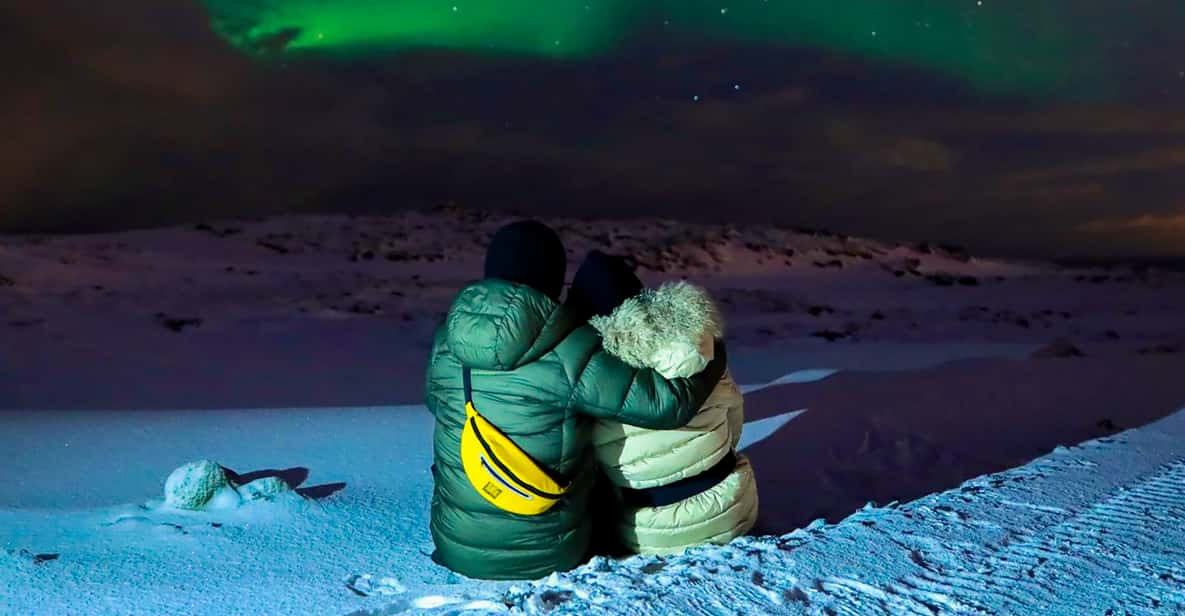
Evening departures from Reykjavik run between 9 and 10 pm, and the hunts last 3 to 4 hours, stretching to 5 when a good night holds. Most tours return between midnight and 1:30 am, and a persistent chase can run past 2 am.
The displays keep their own schedule, and it peaks late. Sightings are possible any time the sky is dark between about 9 pm and 2 am, but the strongest window runs from 10 pm to 1 am, centred near 11 pm.
That is magnetic midnight in Iceland, when the auroral oval reaches its widest extent and substorms release their energy most often.
Faint displays can start once dusk clears, but quiet waiting is common.
Magnetic midnight aligns around 11 pm, driving the most active substorms.
Skies remain pitch-black, but auroral intensity usually wanes after 2 am.
For your evening, that means a late dinner or an early one, a nap if the day was long, and a relaxed next morning. Once out at a viewing stop, give your eyes 15 to 20 minutes to adjust and keep phone screens off while they do.
Look overhead as well as toward the horizon; the lights in Iceland can sit directly above you. On a strong night, even downtown Reykjavik shows them.
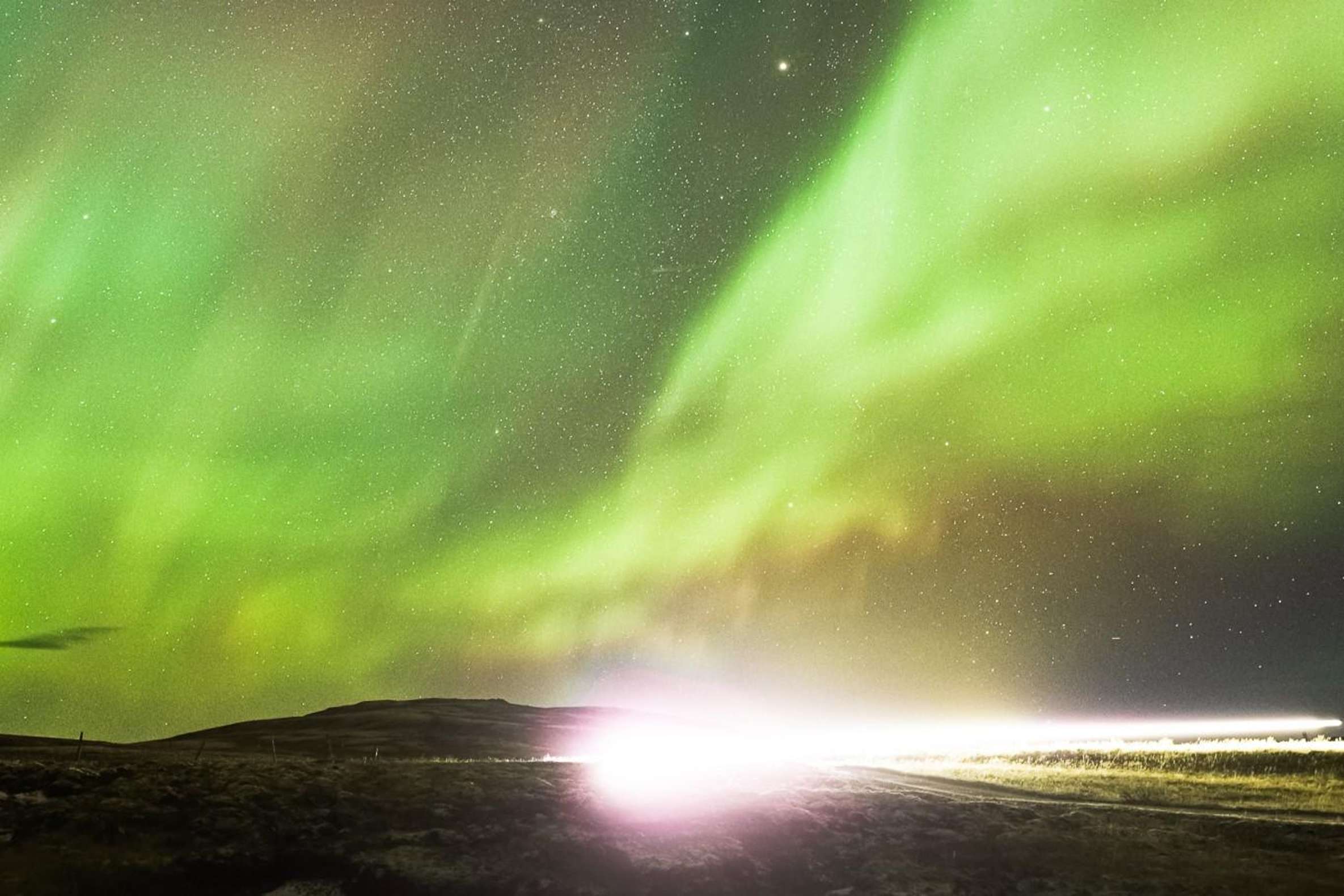
Watching the aurora means standing motionless on frozen ground for one to three hours, and standing still strips heat faster than walking. Midwinter lows sit between minus 3.2 and minus 1.8, and coastal wind makes it feel colder still.
The kit is a three-layer system, none of it cotton. Merino wool or synthetic thermals top and bottom, a fleece or wool mid-layer, then a windproof, waterproof jacket and trousers over it.
On your feet go insulated, thick-soled waterproof boots worn roomy enough for thick wool socks, plus a warm hat, gloves and a neck warmer. Hand warmers earn their pocket space.
Jeans are the classic failure. Cotton soaks up ground moisture and sleet, loses its insulation the moment it is damp, and the wind strips heat straight off the wet surface. People wear them once and never again.
No suitable winter outerwear Guides can deny boarding, since standing frozen in open country is a safety risk; arrive in proper insulated layers
Dress for standing in a field, and the heated bus is the bonus that waits for you afterwards.
Both routes see lights, and they suit different travelers. A guided hunt puts the forecasting, routing and night driving on someone else: tour drivers talk to each other in real time and track weather models to find cloud gaps a solo driver would miss.
Hunts typically run 30 to 80 km out of the city, toward the Reykjanes Peninsula, Þingvellir or Hvalfjörður, and the return drive happens while you doze.
Self-driving suits travelers comfortable on winter roads, and it pays off for groups of three or more, or anyone who already has a car for the daytime. You set your own departures and can hunt several nights without paying per trip. Renting a car for a single evening hunt rarely makes financial sense.
The honest risks sit on the road. Black ice appears without warning, crosswinds push cars toward ditches on unguarded rural roads, and soft snow shoulders can hide ice that traps a vehicle.
If that list reads like your idea of a bad evening, book the tour and let a driver who does it nightly take the wheel.
The daytime is half the trip, and the season shapes it as much as the night.
In midwinter, with daylight from about 11 am to 3:30 pm, plan short outdoor loops and lean on indoor things: the Aurora Reykjavík museum in the harbour district, with its exhibits and films that make sense of what you will see later, or Perlan's Áróra planetarium show simulating the sky.
The shoulder months give you room for a full Golden Circle loop in proper light.
Warm water balances the cold. Sundhöllin in the centre has rooftop hot tubs looking toward the Hallgrímskirkja tower, and Sky Lagoon sits on the ocean a short drive out. Soak before the tour, since hunts return after midnight and pools close well before then.
For the gap between day tour and night tour, hot food near the pickup stops beats waiting in a lobby. Messinn on Lækjargata serves pan-fried fish in skillets until 10 pm, and The Laundromat Café and Dirty Burgers & Ribs both sit within a few minutes' walk of the central bus stops.
Any month from September through March gives you real odds, and a week's stay turns the hunt from a gamble into a plan. Book the tour for your first night, dress for standing still, and let the retry policy do the rest.
What decides a night is cloud, not the Kp number, and what decides a trip is how many evenings you can spare.
book your first night in town
Coaches and minibuses handle the winter driving on dark nights, so you can watch the sky instead of the road.
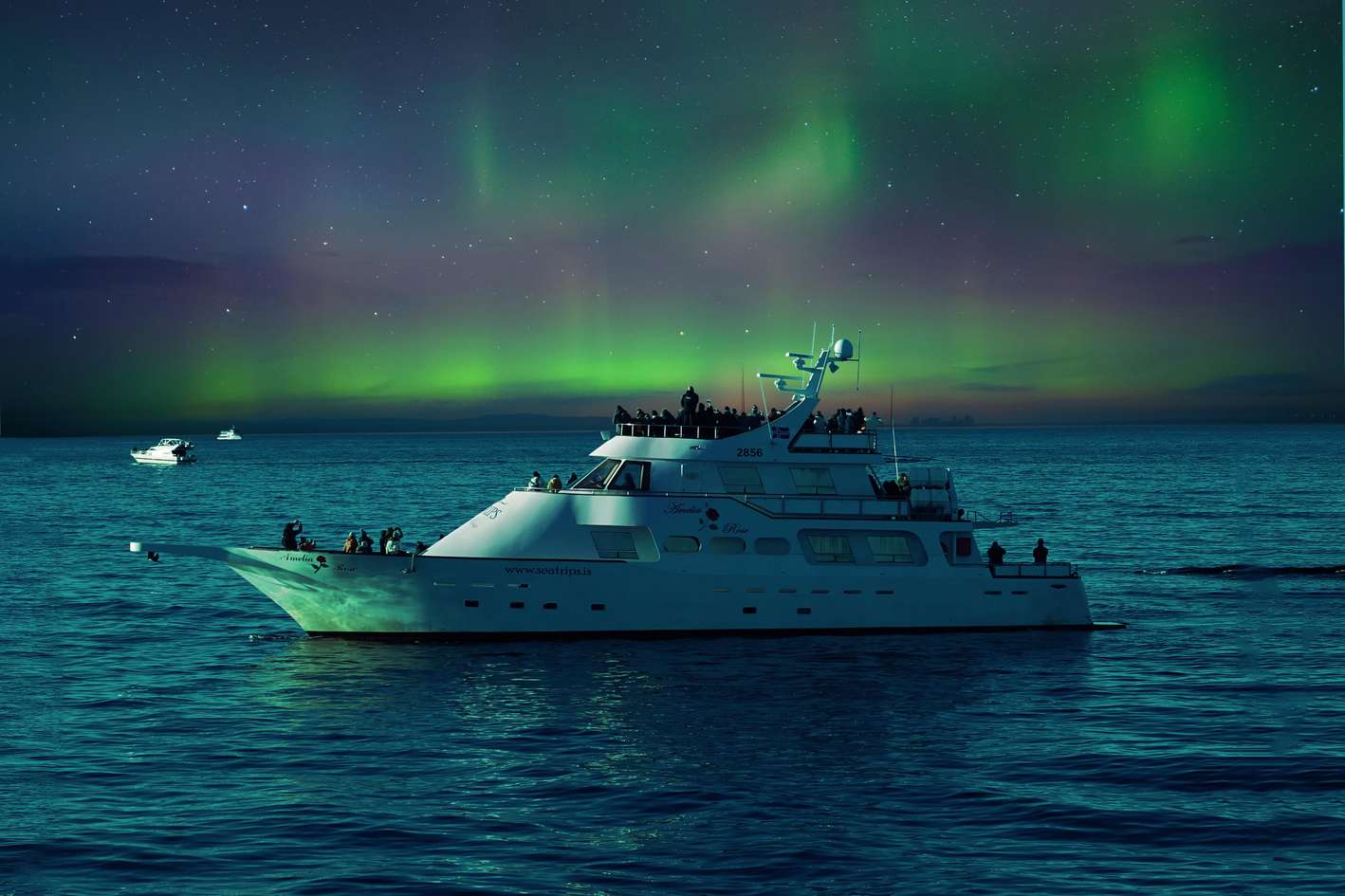
Sailing out of Old Harbor puts the city glow behind you, with warm lounges waiting when the wind picks up.
High-clearance 4x4s reach remote dark spots that midwinter snow keeps regular buses away from.
Fewer passengers means shorter boarding lines and a guide who has time to help with your camera.
A private vehicle follows the clearest skies of the night, which matters when clouds move fast.
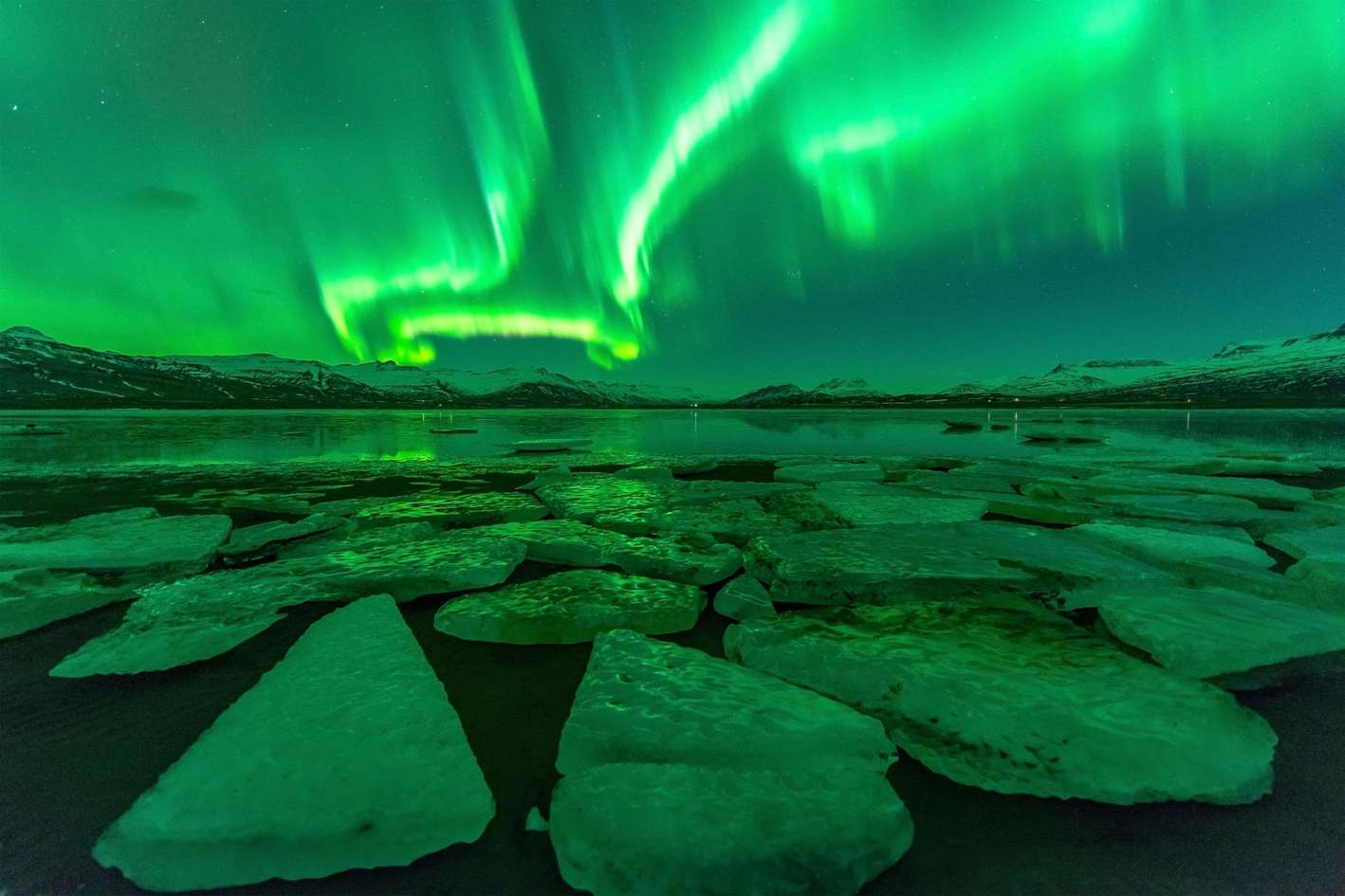
How to pair an afternoon soak with an evening aurora hunt in one well-timed day.
december: least cloud, 73%
Straight answers on when to book your trip and how often the lights really show.
Reykjavik2026No. The viewing season runs from late August to mid-April. From May through July Reykjavik gets zero hours of true darkness, so no aurora can appear in the sky.
December, January and November give the most darkness: 14.6, 13.9 and 13.4 hours of full night each day. December is also the least cloudy month in Southwest Iceland, at an average of 73% cloud cover.
The lights appear roughly every other night when skies are clear, about 3 to 4 nights a week during the active season. Cloud cover is the bigger obstacle than solar activity.
December leads on both counts. It averages 14.6 hours of full darkness and the lowest cloud cover of the season at 73%, followed closely by March and April at 75%.
March and October strike the best balance. March gives 11.8 hours of daylight and 8.7 hours of darkness with 17.3 clear dark nights within chase reach; October gives 9.7 daylight hours and 10.8 dark hours.
Yes, and January is the busiest month for tours. It brings 13.9 hours of full darkness a day, about 9.3 clear dark nights in the city and 14 within 75 km, with temperatures between -3.2°C and 1.4°C.
Plan for about a week. Modeled odds of a sighting at least once in seven nights range from 72% to 87% by month, while four nights give you 49% to 69%.
Storms between November and February sometimes force operators to reroute, stay closer to Reykjavik, or cancel the evening entirely. Decisions come by late afternoon, usually around 5 pm or 6:15 pm, and you get a free rebooking or a full refund.
Tours run until mid-April, when departures end as daylight takes over. April still has 3.8 hours of full darkness a night and about 6 clear dark nights in the city, with milder air and far smaller crowds than midwinter.
Evening departures generally leave between 9 pm and 10 pm, and most excursions last 3 to 4 hours, returning between midnight and 1:30 am. In the shoulder seasons of late August and March, departures run between 10 pm and 1 am.
It does not. If the aurora is active, a full moon leaves it clearly visible and actually helps by lighting up the landscape in the foreground of your photos.
Camera sensors register faint auroral colors long before your eyes can separate them from a gray haze. If a display looks weak to the naked eye, it often shows up vividly on camera.
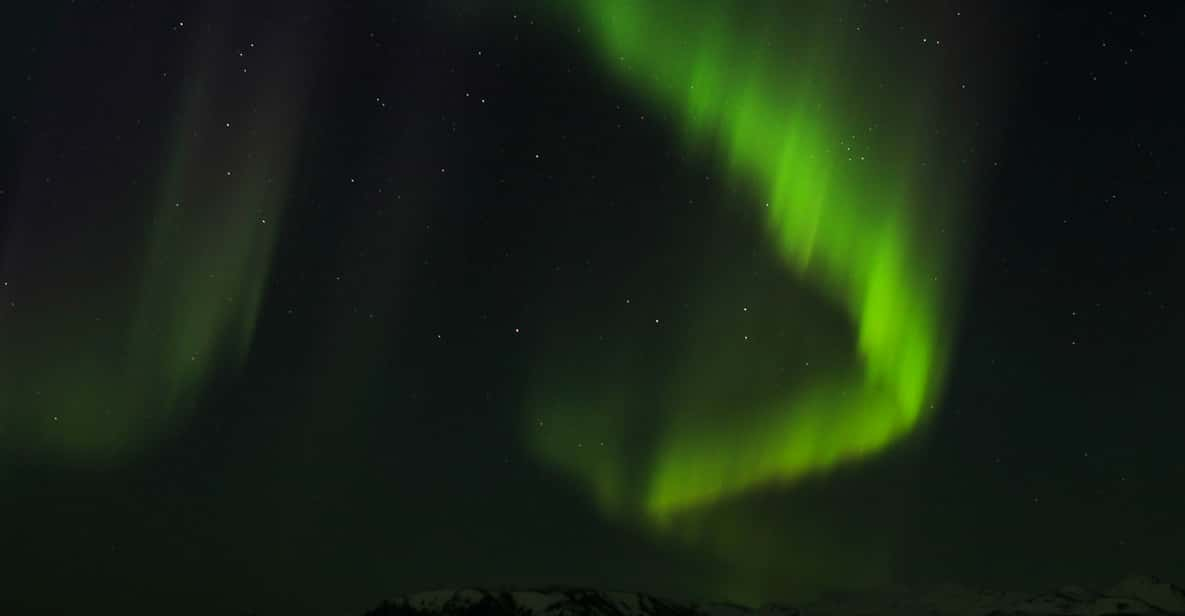
decided by 6:15 pm if clouds win
Choose your date and book ahead: free cancellation up to 24 hours in advance and a free retry tour if the lights stay hidden.